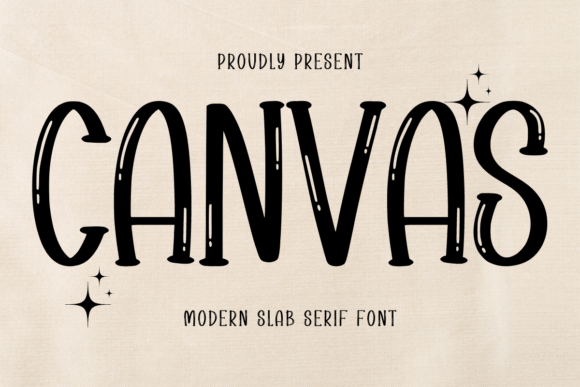
Canvas
Canvas is a bold and distinctive slab serif font that commands attention with its wide, chunky characters and strong, modern aesthetic. Its visual presence makes it an excellent choice for designers seeking to create impactful, eye-catching designs across a variety of mediums.
Designed with versatility in mind, Canvas excels in applications where clarity and style are equally important. Its robust structure ensures readability even at smaller sizes, while its thick serifs add a sense of weight and authority. This combination makes it ideal for headlines, posters, packaging, and other design elements where visual impact is key.
Why Canvas Matters in Graphic Design
In the world of graphic design, typography plays a crucial role in shaping the overall look and feel of a project. Canvas stands out as a powerful tool for creating visual hierarchy and reinforcing brand identity. Its modern slab serif style aligns well with current design trends, offering a fresh and professional appearance that can elevate any creative project.
For branding and logo design, Canvas provides a strong foundation for building a cohesive visual identity. Its clean lines and structured form make it suitable for both digital and print media, ensuring consistency across all touchpoints. Whether used in a logo, website header, or marketing collateral, Canvas helps establish a memorable and recognizable brand presence.
Practical Applications of Canvas
Canvas is highly adaptable, making it a valuable asset in various design scenarios. Here are some key areas where it shines:
- Marketing Materials: Use Canvas for brochures, flyers, and banners to grab attention and convey messages effectively.
- Social Media Content: Its bold style works well for Instagram posts, Facebook covers, and Twitter headers, helping your content stand out in a crowded feed.
- Website and UI Design: Incorporate Canvas into headers, buttons, or call-to-action elements to enhance user engagement and visual appeal.
- Packaging Design: The font's strength and clarity make it perfect for product labels, boxes, and tags, adding a premium feel to physical goods.
When selecting a font like Canvas, consider how it interacts with other design elements. Pairing it with complementary typefaces, colors, and imagery can create a balanced and visually appealing composition. For instance, using a sans-serif font for body text alongside Canvas for headings can provide contrast and improve readability.
Design Tips for Using Canvas
To get the most out of Canvas, keep these tips in mind:
- Ensure Readability: Test the font at different sizes and in various contexts to confirm it remains legible and effective.
- Maintain Consistency: Use Canvas sparingly to avoid overwhelming the design. It works best as a focal point rather than a background element.
- Consider Brand Guidelines: Check if Canvas aligns with your existing brand system, including color palettes, spacing, and other visual elements.
By thoughtfully integrating Canvas into your design workflow, you can enhance the visual appeal and effectiveness of your projects. Whether you're working on a logo, a social media campaign, or a print advertisement, this font offers a powerful way to communicate your message with style and impact.
Ultimately, the right choice of typography can make a significant difference in how your audience perceives and interacts with your work. Canvas provides a strong, modern foundation that supports both creativity and professionalism, making it a valuable addition to any designer's toolkit.